
In the previous article we discussed about Fat blooming. In this article we will focus on Sugar bloom, their appearance, causes and some solutions.If you haven’t read the previous one, you can read it here –Blooming in chocolates-Blooms and defects

Sugar bloom- The moisture culprit
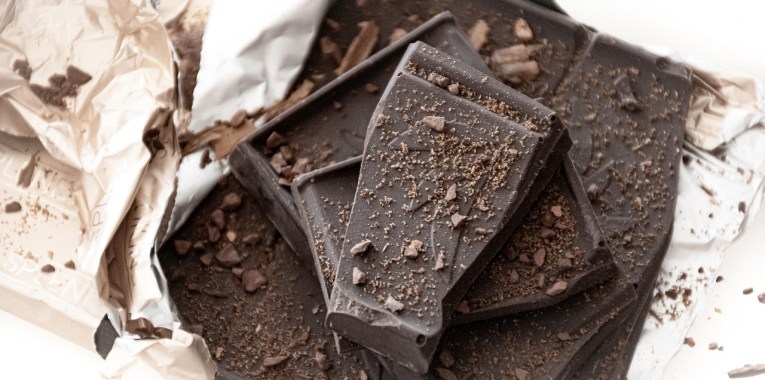
It looks like a grainy, white, crusty or powdery film on the surface. Its differentiation from Fat bloom is that unlike fat bloom it is dry and rough to touch, which creates a sensation that the smoothness of chocolate has turned into the roughness of a sandpaper. To a consumer, it looks like small sugar crystals have formed on the surface, which in fact have.
The sugar bloom happens when moisture comes in contact with the chocolate. As we know sugar has affinity towards water, so when the moisture comes in contact with chocolate, the sugar gets dissolved in it and when the misture gets evaportaed, the sugar is left behind in crystal form on the surface of the chocolate.
Common causes and solutions
High Ambient Humidity During Production or storage
Chocolate is highly hygroscopic, which means it readily absorbs moisture. When the relative humidity is higher than 55%, the water vapor gradient pressure between the surrounding air and the chocolate causes the moisture to move towards the chocolate , resulting in condensation happening on the chocolate surface. Simply put, the surrounding air has more water than the water loving chocolate surface, so the moisture moves from a high moisture reservoir to the low misture reservoir which is the the chocolate. This can happen even if thare are no drastic temperaturee changes.
Solution :- Maintain a controlled environment with relative humidity below 55%. If possible maintain it between 45-50%. This controlled environment should be maintained in production, packaging and storage areas. This will prevent condensation.
Drastic Temperature changes
Moving chocolate from a cold environment that is, a fridge or a cold room, to a warm room gives rise to dew point condensation. The surface of the chocolate is cold and so it is below the dew point of a warm atmospheric air. This results in water droplets forming on the chocolate surface.
Solution:- A routine should be made where the temperature gradually rises from cold to warm. This can stop moisture on surface.
Storage Temperature
Intuitively we would like to think that the lower the temperature is , the faster it will be solidify. While it may be true in some parts, but inevitabily when the chocolate comes out of the fridge the delta or the difference in temperature will be so high that chances of dew point condensation will become very high.
Solution :- The chocolate should be stored in a consistent , cool and dry temperature range, ideally 18-20 degree C.
Wet molds or equipment
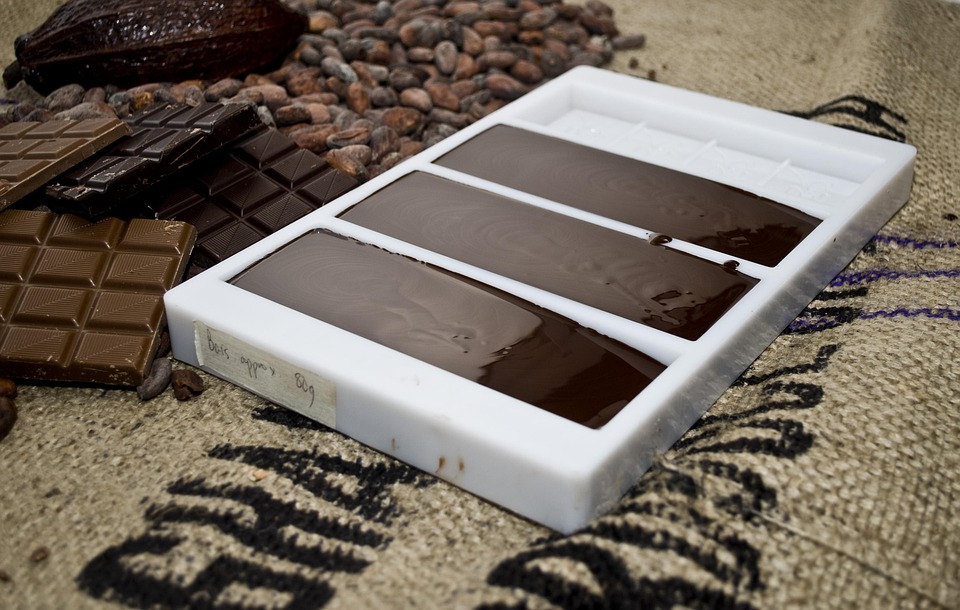
Any residual moisture which is left in the molds or the surface of the equipment in which the chocolate is made or prepared, can seep into the chocolate and cause havoc.The free water dissolves the sugar more readily and the probability of sugar bloom happening becomes very high.
Solution :- Please ensure that any and all equipments which comes in contact with chocolate is perfectly dry. Molds can be warmed slightly above the melting temperture of chocolate which further stops thermal shocks.
Fillings with high mositure content
Chocolates with high moisture content fillings, such as fondants, caramels or ganaches, are highly prone to moisture migration. Here the process is opposite of the high ambient humidity factor. As the filling has a higher moisture content, the water wants to move to the lower moisture content region which is the chocolate itself. Add to that the affinity towards moisture of chocolates. This water then dissolves sugar during its way out and after evaporation sugar blooms are left.
Solution :- Use fillings with low water activity.Other remedy can be to integrate fillings with things which have a higher moisture affinity than chocolate or sugar. some examples can be sorbitol or invertase.
Type of sugar
Sugar in itself is highly hygroscopic. But certain sugars are more hygroscopic than others. Types of brown sugars or low grade sugars dissolve water more readily and can cause sugar bloom.
Solution:- Any sugar used must be of high quality. Double check before incorporating sugar into the chocolate that it has not absorbed moisture during storage.
Packaging
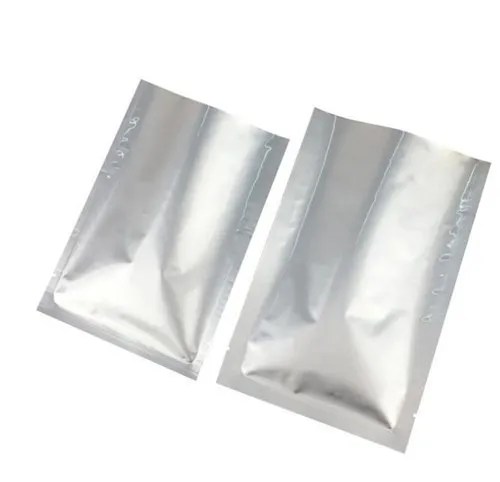
We have discussed about importance of proper packaging in one of our earlier articles which you can read here(Can Chocolates go bad?). If the packaging is not moisture sealed, the moisture can reach from the atmosphere into the chocolate. This issue can get out of control very fast when the chocolate is being transported or stored in uncontrolled conditions.
Solution :- Use high-barrier, moisture-proof packaging materials, such as laminated foils or specialized plastic films. Ensure that the packaging is hermetically sealed to create a moisture- and vapor-proof barrier
Surface pores and cracks
The microstructure of chocolate can get compromised by rapid cooling or improper tempering leading to small cracks or pores on the chocolate surface. These cracks provide a way to the moisture to penetrated the chocolate and come back up with dissolved sugar, causing Sugar bloom.
Solution: Improve the tempering process to ensure a stable, well-structured crystal lattice of cocoa butter. Control the cooling curve to prevent thermal stress that can cause cracking.
Starch or powder coating
Some chocolate confectioneries are coated with starch or some powders before packaging. If these starch or powders are high in moisture content, it can cause sugar bloom.
Solution :-Use non-hygroscopic, inert dusting powders. Ensure the application environment is dry and the powders are stored properly. Alternative release agents that do not contain moisture are also a viable solution.
Sweating
Some centers which are primarily sugar based, release moisture over a long period of time in warm conditions which is called sweating. If adequate barrier is not coated, this moisture can seep into chocolate and cause sugar bloom.
Solution:– This is an issue of formulation and is best addressed by controlling the moisture content and water activity of the center. Adjusting the syrup’s composition or adding moisture-binding agents can mitigate this issue.
We hope that the above articles has helped you in determining the probable causes of Sugar Bloom and get an idea of their probable remedies.
Book a 1 hour Technical Strategy Session today.
For India- Rs. 2499/-
Outside India- USD 39/-
 rudvik engineers