
Case Study: Engineering Thermal Stability
Title: Elevating Compound Chocolate coating melting point to 42°C without compromising palate Flow.
1. The Challenge A client was facing severe product degradation during transit. Their compound coating had a low melting point, causing ‘sticking’ to packaging and loss of gloss. Most solutions for raising melting points result in a ‘waxy’ mouthfeel or high viscosity that makes the coating process impossible.
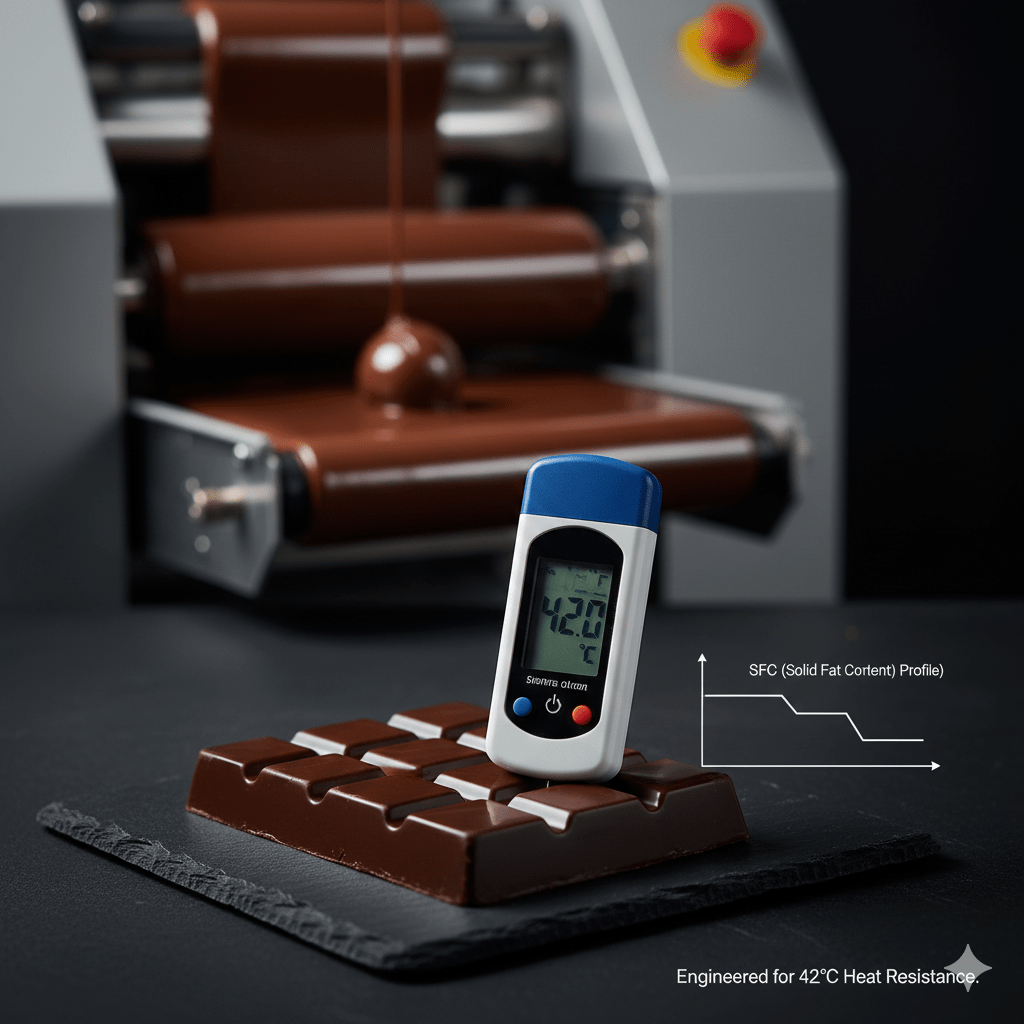
2. The Engineering Audit We analyzed the triglyceride structure of the vegetable fats being used. The goal was to increase the Solid Fat Content (SFC) at higher temperatures while maintaining a sharp melting curve at body temperature. We identified that the cooling rate and the emulsifier balance were causing the fat to crystalize in an unstable form.
3. The Solution
- Precision Recipe Tweaks: Recalibrated the fat-to-solids ratio to strengthen the crystal lattice.
- Thermal Engineering: Increased the heat resistance to 42°C.
- Process Optimization: Ensured that despite the higher melting point, the viscosity remained low enough for high-speed enrobing lines.
4. The Result
- Thermal Success: The product now survives non-refrigerated transport in peak summer.
- Palate Integrity: Zero “waxiness”—the chocolate still breaks down perfectly on the tongue.
- Business Impact: Reduced logistics returns and saved the client from investing in expensive cold-chain shipping.
Facing the same problem?
Book our 45 minutes Industrial Technical Discovery session.
Price for India- Rs. 7499/-
Outside India- USD 169/-
Case Study: Flavor Engineering via Thermal Profiling
Title: Eliminating Harsh Acidity and Bitterness through Kinetic Roasting Profiles (Non-Alkalized).
1. The Challenge A bean-to-bar manufacturer was struggling with high volatile acidity and intense bitterness in their single-origin profile. To fix this, most makers resort to Alkalization, which destroys the bean’s natural antioxidants and flattens the flavor profile. The goal was to achieve a ‘mellow’ palate while keeping the label 100% natural.”
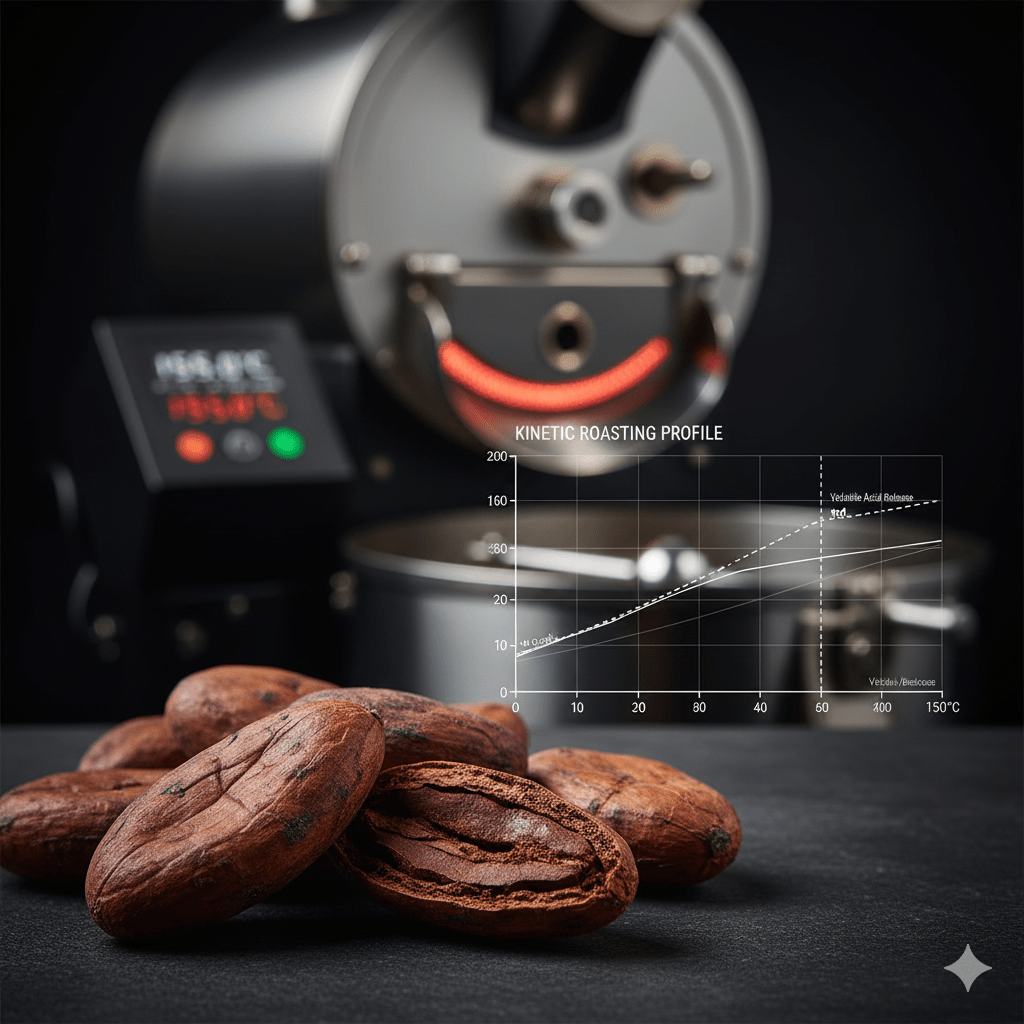
2. The Engineering Audit – We analyzed the Maillard reaction timing. Bitterness is often a result of ‘Case Hardening’—where the outside of the bean roasts too fast while the acids stay trapped inside. I monitored the moisture release curve and identified that the ‘Development Phase’ of the roast was ending too abruptly, leaving behind high levels of acetic acid.
3. The Solution
– Kinetic Roasting: We redesigned a multi-stage roasting profile. We slowed down the ‘Drying Phase’ to allow acids to evaporate and extended the ‘Development Phase’ at a lower temperature to convert bitter polyphenols into aromatic compounds.
– Airflow Calibration: Adjusted the roaster’s exhaust pressure to ensure volatile gases were removed effectively during the first crack.
4. The Result
– Sensory Success: A balanced, mellow chocolate with only a “pleasant” slight bitterness, requiring zero chemical alkalization.
– Clean Label Advantage: The client was able to market a ‘Pure’ product, increasing their retail price point by 25%.
– Process Efficiency: Optimized the roast for consistency across 50kg batches.
Book our 45 minutes Industrial Technical Discovery session.
For India – Rs. 7499/-
Outside India- USD 169/-
 rudvik engineers