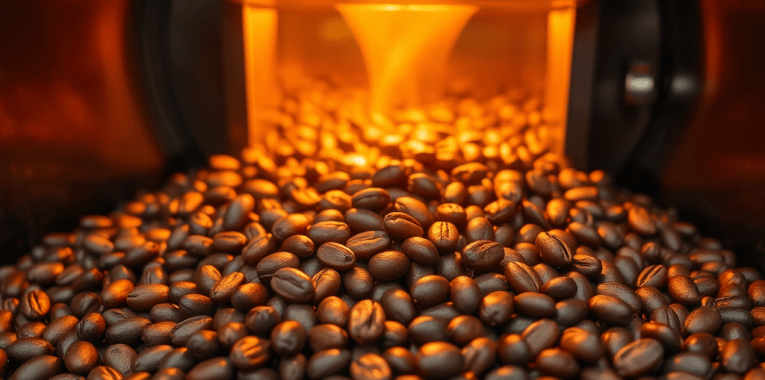
The importance of correct roasting of cacao beans in chocolates.

Roasting is the bridge between agriculture and gastronomy. While the inherent genetics of cacao tree and the precision of post-harvest fermentation provide the raw potential of a chocolate’s flavor, it is the roasting profile that acts as the final judge of the taste soon to be experienced.

In specialty chocolate, the “correct” temperature range is not a static number, but a dynamic progression. Understanding the thermal physics of the cocoa bean is essential for any maker looking to transform bitter, acidic seeds into a complex, nuanced delicacy.

The Thermodynamics of the Cocoa Bean

To understand roasting, we must first look at the bean as a complex biological vessel. A cocoa bean is roughly 45-50% fat (cocoa butter), with the remainder composed of proteins, carbohydrates, and moisture.

When heat is applied, the bean undergoes a series of physical and chemical transformations. The challenge lies in the fact that cocoa beans are non-uniform; they vary in size, density, and moisture content depending on their origin and fermentation quality.

-Heat Transfer Mechanisms

In a roaster, heat reaches the bean through three primary methods:
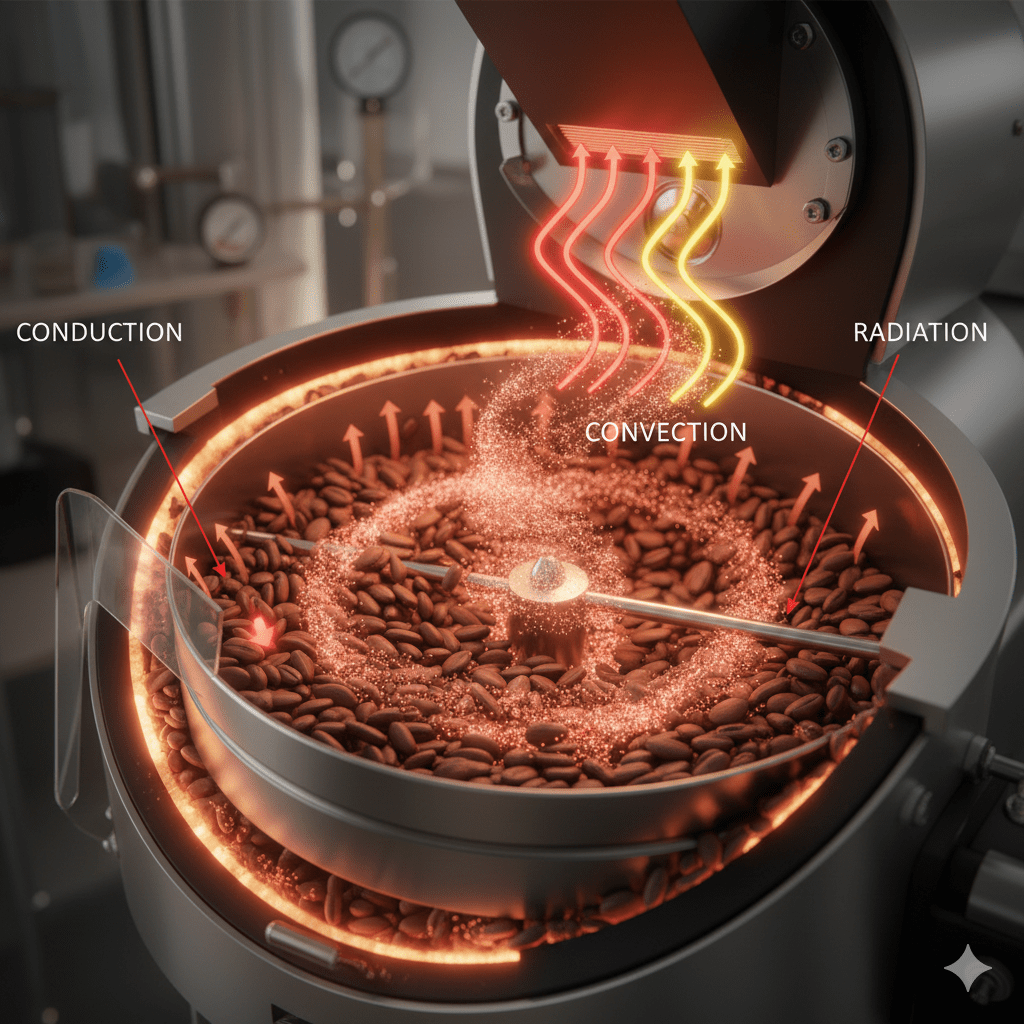
Conduction: Direct contact with the hot walls of the roasting drum.

Convection: The movement of hot air around the beans (the most controllable variable).

Radiation: Heat emanating from the internal surfaces of the roasting environment.

The goal of a sophisticated roasting profile is to balance these three forces to ensure the bean roasts evenly from the outside in, preventing “tipping” (burning the edges) while ensuring the core reaches the desired chemical state.

Phase One: The Drying and Dehydration Stage

The journey begins with the removal of residual moisture of the fermented cocoa beans. Even well-cured beans contain a specific percentage of water. As the beans enter the roaster, the initial thermal energy is consumed primarily by evaporative cooling.

During this stage, the temperature must be managed to allow moisture to escape without creating excessive internal steam pressure, which could rupture the bean’s cellular structure prematurely(a scenario which is most likely faced by new home bakers trying to roast cocoa beans). This phase is critical because moisture acts as a conductor; if the bean dries too quickly or too slowly, the subsequent chemical reactions—specifically the Maillard reaction—will be inconsistent.
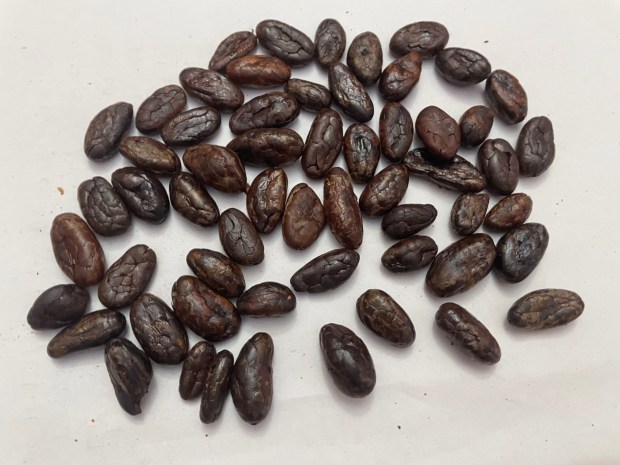
Phase Two: The Maillard Reaction and Flavor Precursors

As the moisture content drops, the bean enters the most complex stage of the profile: the Maillard reaction. This is a chemical reaction between amino acids and reducing sugars that gives browned food its distinctive flavor.

In cocoa, this is where the “chocolate” notes are born. However, the Maillard reaction is highly sensitive to the rate of temperature increase (often called the Rate of Rise or RoR).

Too fast: You risk developing “burnt” or “ashy” notes before the internal chemistry has fully matured.

Too slow: You may “bake” the bean, resulting in a flat, cardboard-like flavor profile that lacks acidity and brightness.

Maintaining the correct thermal trajectory here ensures that the precursors developed during fermentation are converted successfully into aromatic compounds like pyrazines, which provide the nutty, roasted backbone of high-quality chocolate.

-Phase Three: Acid Reduction and Volatile Evolution

Cocoa beans, particularly those from certain origins like Madagascar ,Vietnam or Brazil, can be highly acidic. Much of this acidity comes from acetic acid (the same acid found in vinegar) produced during fermentation.

The roasting profile acts as a thermal filter for these acids.

Lower thermal peaks tend to preserve the delicate, fruity esters and bright phosphoric or citric acids.

Higher thermal peaks drive off the more aggressive acetic acids but risk destroying the subtle floral notes.

The “correct” range is therefore a choice: are you roasting to highlight the origin of the fruit, or are you roasting to emphasize the deep, caramelized development of the roast itself?

The Critical Role of the “End of Roast” and Development Time

The final moments of a roast are the most volatile. This is the Development Phase. Once the bean reaches a certain thermal threshold, the reactions become exothermic—the bean begins to generate its own heat as internal structures break down, the most important step.

If the temperature range is not strictly controlled during this window, the bean can “run away,” spiraling into over-roasting within seconds. This stage determines the color and texture of the final liquor. A well-executed development phase ensures that the tannins are mellowed, reducing astringency and creating a smooth mouthfeel.

-Why “One Size Fits All” Fails

The importance of finding the specific range for each batch cannot be overstated. Factors that influence the ideal thermal profile include:

Bean Size: Small beans (like those from Ecuador) heat up faster than large beans (like those from the Dominican Republic).

Density: Denser beans require a more aggressive initial heat application to penetrate the core.

Fat Content: Higher cocoa butter content changes how the bean absorbs and retains thermal energy.

The Danger of the “Flash Roast”

Some industrial processes use extremely high heat for very short durations. While efficient, this often results in a “scorched” exterior and an under-developed “raw” interior. This imbalance creates a chocolate that tastes both bitter and unpleasantly acidic—a hallmark of poor thermal management.

Monitoring and Precision

Modern craft chocolate makers use sophisticated software to track the Environmental Temperature (ET) and the Bean Temperature (BT) in real-time. By plotting these on a graph, they create a “map” of the roast.

The goal is a smooth, declining Rate of Rise. Any sudden spikes or “crashes” in temperature indicate a loss of control that will manifest as an inconsistent flavor. The precision of the sensors and the responsiveness of the heat source (gas or electric) are the tools that allow a roaster to stay within the narrow “goldilocks zone” of flavor development.
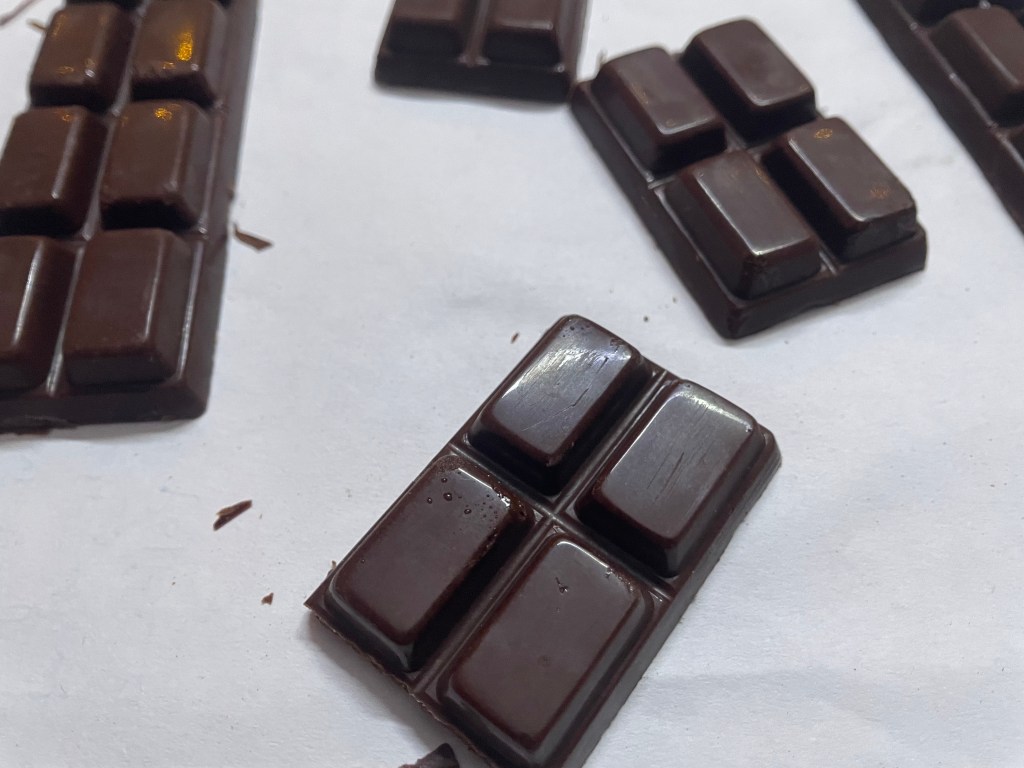
Conclusion: The Invisible Ingredient

Temperature is more than just a setting on a dial; it is the energy that dictates the molecular rearrangement of the cocoa bean. A master roaster doesn’t just look for a final number; they look for a progression of heat that honors the work of the farmer and the potential of the soil.

By respecting the specific thermal requirements of the drying, Maillard, and development phases, makers can unlock a spectrum of flavors—from jasmine and raspberry to toasted oak and fudge—that would otherwise remain trapped within the raw bean.

Contact us if you are struggling to find that sweet spot of correct roasting profile for your cocoa beans.

Book your 1 hour Technical Strategy Session today.

For India :- Rs. 2499/-

Outside India:- USD 39/-
Blooming in Chocolates- Blooms and Defects

A lot of hardwork, planning and meticulous timing goes into making chocolates. The chocolate maker wants nothing but the chocolate they have put so much work in , to turn out delicious , melt in the mouth and silky for the person enjoying those chocolates. However, nothing pains the chocolatier more when the chocolate shows signs of trouble. Trust us, we have been there and it is harsh and demotivating. A thin white film on the chocolate , either slippery or powdery which seems to ruin all the hardwork. 

We are here to let you know that please do not despair. It is the most common problem which happens in both pure and compound chocolates. The first step in removing these white films is understanding what these chocolate defects are and the root cause for them. At Rudvik Engineers we have seen it all and in this article we will try to demystify, troubleshoot these unwanted defects in your otherwise sublime chocolates.

Chocolate Bloom

What is “Bloom” and Why Does it Happen?

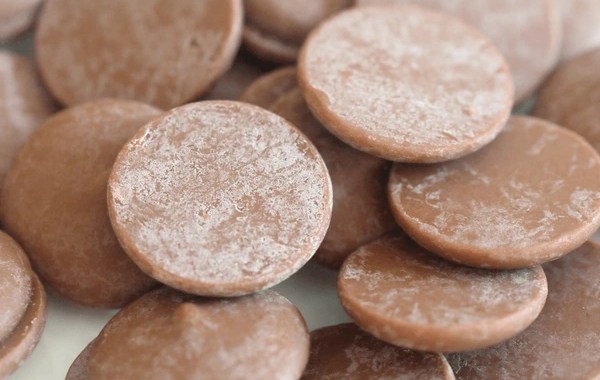
“Bloom” is the general term for the unwanted white or grayish film that can appear on the surface of chocolates. It can be broadly categorized into two main types: fat bloom and sugar bloom. Both of them are signs that your chocolate’s integrity has been compromised, though their origins and solutions differ significantly. In this article we will focus on fat bloom.

Fat Bloom:- The slippery culprit

Appearance :- It appears as a dull, grayish, or white powdery film that makes the chocolate appear old or stale. It feels greasy to the touch, and the chocolate loses its characteristic snap and shine.

Reason:- What is happening here is that the cocoa butter present in the chocolate is moving to the surface due to the rearrangement of the crystalline structure of the chocolate. We have explained about the crystalline structure of the chocolate and the best variant which Beta V where the chocolate is most stable in our earlier article …Understanding Fats in Your chocolate – Part 2

As stated in the above article Cocoa butter can exist in several different crystal forms (polymorphs also known as polymorphism in chocolates). When chocolate is improperly tempered, or exposed to fluctuating temperatures, the unstable cocoa butter crystals migrate to the surface and recrystallize into a larger, less desirable form (Form VI), which scatters light and appears white. Think of it like a beautiful brick wall where some bricks (fat crystals) have started to push their way out and create an uneven surface.

Common Causes of Fat Bloom

Improper Tempering

The most common of all reasons of Fat bloom is improper tempering. If the chocolate has not went through the proper temperature cycle to attain the Beta V crystalline structure, any further temperature difference can break the weak structure and cocoa butter can migrate to the surface , causing Fat Bloom. Read more about Chocolate tempering in our article Why chocolate tempering is a must.

Storage Conditions

We have already discussed about temperature fluctuations during tempering. However even when a chocolate is tempered correctly, improper storage conditions can push the cocoa butter on the surface. This can happen when the frequency of temperature changes(even a small change of 2-3 °C) during storage are very high.

Incompatible Fats

In the case of Compound chocolates, if the fat used or the blend of fats used are incompatible with the cocoa particles or sugar particles, these fats can then move to the surface , causing Fat bloom. Read more about the compatibility of fats in chocolates in our article Understanding Fats in your chocolate- What you need to know.

Particle Size Distribution

Chocolate PSD- Credit :-Determination of chocolate melting properties by capacitance based thermal analysis (CTA) - Scientific Figure on ResearchGate. Available from: https://www.researchgate.net/figure/Particle-size-distribution-in-chocolate-at-different-times-during-refining_fig3_320961368 [accessed 10 Aug 2025]

Chocolate PSD- Credit :-Determination of chocolate melting properties by capacitance based thermal analysis (CTA) – Scientific Figure on ResearchGate. Available from: https://www.researchgate.net/figure/Particle-size-distribution-in-chocolate-at-different-times-during-refining_fig3_320961368 [accessed 10 Aug 2025]

In one of our previous articles , The importance of micron size in chocolates we discussed about how much percentage of particle in the chocolate are around or less than the required particle size. This is called Particle Size Distribution , PSD. A sweet spot for the PSD is that 90% of particles present in the chocolate should be between 18-22 microns. If you keep reducing the particle size or rearranging the PSD, the chocolate will sure become more homogenous, but the surface area of the total particles present will increase. This can create a greater interlocking between the particles, which can inturn increase the chances of cracks to develop , from where the fat can move to the surface.

Emulsifiers

Emulsifiers are one of the key ingredients which hold together cocoa particle, sugar and fat. You can read more in our previous article Emulsifiers-Sweet secret to perfect chocolate texture. However the type of emulsifier being used, its source and its concentration also affects its compatibility with the fat being used , which if used incorrectly can cause the Fat to migrate.

Porosity

The internal pore structure of the chocolate matrix can also give rise to FAT migration. This can happen during Refining, grinding or conching stage.

Some solutions

Correct Tempering

This is a no brainer. The correct temperature cycle has to be done, which is different in case of different chocolates. 

For milk chocolates 

Complete Melt out – 45-50 °C

Controlled and Rapid Cooling – 27-29 °C

Reheating- 29-31 °C

For Dark Chocolates

Complete Melt out – 50-55 °C

Controlled and Rapid Cooling – 28-30 °C

Reheating- 31-32 °C

This cycle alongwith continuous agitation ensures that the correct Beta V crystals are formed which give rise to a stable, shiny chocolate.

Storage Conditions 

A consistent temperature range which is narrow, has to be maintained, ideally 18-20 °C, with minimal fluctuations

Humidity must be kept between 50-55 %.

Advanced packaging can also be used like barrier films.

Incompatibility with Fats

Using high quality cocoa butter with a consistent triglyceride profile.Why is it needed you ask? Well if you have gone through our earlier article as mentioned above, triglycerides with similar melting and crystallizing behaviors help maintain stable fat crystals which is the Beta V.  Too much variability in triglyceride types can interfere with proper crystal formation, leading to unstable crystals that are more prone to migrate to the surface, causing Fat bloom.

When making compound chocolates, any fat apart from cocoa butter must be of similar melting point and triglyceride profile. One can also use the method of fractionating the fats which enriches stable triglycerides. In case of using a filling in a chocolate shell, what works is a barrier fat between the filling and the chocolate which can help stop the fat inside the filling or insie the chocolate to migrate to the surfaace.

In the next article we will talk about Sugar Bloom, its causes and some solutions.

We hope the above article has helped you in some way in your chocolate making journey.

Book a 1 hour Technical Strategy Session today.

For India- Rs. 2499/-

Outside India:- USD 39/-
Can Chocolates go bad? Testing for shelf life

In the earlier article (Can chocolates go bad? A look into the shelf life of chocolates) we discussed in brief about the shelf life of chocolates, what it means , and some tips to ensure that the chocolates and the chocolate products have a good shelf life.

In this article we will discuss about the different types of testing which are done to check the shelf life of a chocolate product and the methodology of these tests. This should give an idea about the various types of tests done for shelf life, their procedures and the industry acceptable test results.

Chemical Analysis Test

Peroxide Value Test (PV Test)

The purpose of this test to measure the extent of Fat oxidation which will happen when the chocolate moves into the real world environment, which will be a primary indicator of rancidity and chocolate spoilage.

In this procedure the Lipids are extracted from the chocolate. The PV is determined using iodometric titration according to the Association of Official Analytical Chemists(AOAC) protocols, where the peroxides present, liberate the iodine from Potassium Iodide, and the iodine is titrated with sodium thiosulfate. The result is expressed in 10^-3 equivalents of active oxygen per kilogram of fat.

The generally accepted Critical threshold for chocolate is that the PV should not exceed 10meq O2/kg Fat.

Free Fatty Acid Test

The purpose of this test is to indicate the hydrolytic rancidity or lipid degradation of the chocolate.

Here the chocolate fats are extracted and titrated against standardized alkali using phenolphthalein as an indicator. The FFA percentage indicates product degradation over time. A good threshold is 1.75% of FFA. Any more the FFA percentage, the chocolate product is more viable to rancidity, off flavors. In pure chocolates it can also deter the crystallisation characteristic of cocoa butter , resulting in a different temperature range where the most stable form of chocolate, Beta V is obtained. Read more about the crystalline characteristics and their important in our article Understanding Fats in Your chocolate – Part 2.

Moisture Content

We have gone in detail about the effect of moisture content in chocolate in our previous article. This test is done to check the moisture in chocolate.

Here the chocolate sample is dried in an oven at 105 Degree C until constant weight is achieved. The weight which is lost is the moisture percentage. Less than 2% is ideal.

The test results are also mentioned in Aw also called Water Activity. Higher the Aw, higher are the chances of the chocolate going bad faster and the chocolate having a lower shelf life. An acceptable value of Aw is lower than 0.3-0.4.

Microbial Testing 

Total Plate Count

The purpose of this test is to detect general bacterial load.

Here the chocolate is homogenized in sterile buffered peptone water and the dilutions are plated on Plate Count Agar, which are in turn incubated at 30-37 degree C for 24-28 hours. After this period the colonies are counted , and reported as CFU/g. TPC values of less than 10^3 CFU/g are acceptable.

Yeast and Mold Count

This test determine the fungal spoilage agents.

Samples are diluted as before and then plated onto Malt extract Agar or Czapek Dox Agar. These plates are incubated at 25 Degree C for 5 days and then the colonies are counted. Acceptable values are less than 10 CFU/g.

Pathogen Screening 

This test is done to determine presence of Pathogens in the chocolate.

The sample is dipped in selective broths and streaked by selective agars (these selective broths and selective agars respond differently to different pathogens) and then tested by PCR based identification.

Physical Tests

These tests are basic tests which are done to confirm the physical attributes of the chocolate. A small to medium chocolate making facility can easily do these tests as the equipment needed are not so expensive and the method of the tests are not so complex.

Texture Profile Analysis

The purpose of this test is to evaluate hardness, brittleness and mouthfeel changes during storage and transport.

The procedure is to us a texture analyzer , a compression instrument to apply force to the chocolate and record resistance or break point.

Colorimetry

The purpose of this test to detect bloom or discoloration.

The test is done on a Colorimeter ( For eg MINOLTA Chroma meter) on chocolate surfaces, reporting objective color values (L, a,b)

Sensory (Organoleptic) Evaluation

This test assesses apperance, aroma, flavor, mouthfeel and overall acceptability of chocolate product during its storage and transport.

Trained sensory panels of chocolate tasters rate the chocolate product based on standard norms and forms generally acceptable, assessing parameters such as visual appearance, instance and persistance of flavour, aftertaste, aroma and texture. The test is random and most of the times a blind test to avoid bias. Some manufacturers also include industry leader’s chocolate product in these tests to see how their product fares.

Accelerated Shelf Life Testing

The purpose of this test to predict a “best before” date, which is achieved in a shorter time by simulating real world environment and aging factors.

Chocolates are stored at elevated temperatures and humidity. Tests mentioned above such as PV test, moisture test , sensory test are then conducted at fixed intervals of time. The Arrhenius equation is then used to model reaction rates and extrapolate shelf life during normal storage and transport conditions.

Different labs have different procedures where they may vary slightly in carrying out these tests and the orders of the chemical reagents, but all of them are based on validated scientific protocols.

The protocols follow strictly the code as mentioned in the regional certifying organisation such as FSSAI, FSSC, BRC and the manufacturer can ask for the protocol followed during testing to counter with the data available on the certifying organisations data available on public forum.

We hope the above information has helped in identifying your chocolate shelf life questions and information about the different testing methods.

Can chocolate go bad? A look into the shelf life of chocolate

Any food product in today’s world, before hitting your local grocery store shelf or finding a place on your favorite e-commerce platform, must declare the shelf life or best before period of the product, which tells the general consumer , if the said product is safe for consumption or not.

Chocolate and chocolate products are no different and they too must display , clearly, along with their ingredient list, the energy details, manufacturing date and the total shelf life ot best before period. It may range anywhere from a day to 24 months depending upon the type of chocolate or chocolate product.

However with chocolates, determining the shelf life and the ways to do so become a bit confusing and not at all absolute. In this article we would like to point out why shelf life in chocolates is tricky, some points to help determine the shelf life of your chocolate product and factors to consider during the testing phase of shelf life of your chocolate product.

Why Chocolate shelf life is tricky?

We all know to some extent when there is moisture present in a food product, it becomes a breeding ground for mold, bacteria and germs. That is the reason why the dehydrated versions of your favorite fruit , seem to do well, in terms of shelf life. And we also know from many of our previous article here, that from the roasting of fermented cacao beans to the grinding, conching, refining,(read our previous article on ball mills, conches and roll refiners here) all these processes ensure that there is a minimal amount of moisture/water present in the chocolate. We may also remember from our previous articles that any amount of water addition(read about importance of viscosity in chocolates) into the chocolate during the chocolate manufacturing process, either knowingly or unknowingly can have devastating consequences and damage the whold batch of your chocolate.

So if all the processes during the manufacturing of chocolate aim to lessen the water percentage present in chocolate and there is minimal amount of water, then how is there going to be contamination of chocolate due to germs/bacterias and how is the shelf life decided? Are there other factors at play here which affect the shelf life of the chocolate? Spoiler Alert:- There are.

Moisture

Even well dried cacao beans and cocoa powders have some amount of mositure present in them. Note that we have always mentioned negligible, minimal amount of moisture. So, apparently it is not zero. In cacao beans a moisture percentage of less than 7.5% is accepted. In cocoa powders, depending upon the grade of the cocoa powder, amoisture percentage of 2-4% is acceptable. If a chocolate is made just from cacao beans, cocoa butter, sugar and emulsifier as is in the case of dark chocolates, the shelf life is considered on the higher side , 18-24 months.

Cocoa butter has higher stability and less prone to oxidisation , so the dark chocolate variants have a higher shelf life. This leads us directly to the type of fat used for making the chocolates. If instead of cocoa butter, vegetable fats or blends of vegetable fat are used, the shelf life decreases , which can be any where between 12-18 months. As these fats, which may be used as Cocoa Butter Substitutes(CBS), cocoa butter enhancer(CBE) or cocoa butter replacer(CBR), have higher susceptibility of oxidation, the shelf life decreases. 

Now if we move towards milk chocolates, the addition of milk fats and other additives also drammaticaly reduce the shelf life of the chocolate as milk fats are likely to have rancidity and off flavors.

Moving towards chocolates with fillings, nuts or inclusions, these all affect the shelf life of chocolate product as a whole as these fillings, nuts or inclusions are more perishable.

Storage conditions

Apart from all of the above the storage conditions in which the chocolate are stored or transported also effect the shelf life. An ideal temperature of 15-18 ℃ (59-64°F) with low humidity(less than 55%) is great for storage of chocolate products resulting in a higher shelf life and improved consumption experience. Higher temperature can cause fat to migrate resulting in Fat Bloom and higher humidity can cause sugar to migrate resulting in sugar bloom.

Prolonged exposure to light and air can accelerate oxidation specially in milk and white chocolates with fillings, nuts or inclusions. A good solution for these problems are to invest in higher quality packaging with nitrogen(as an inert gas) cushioning which can prevent air and light entry into the chocolate product.

Methods to determine shelf life

Sensory Testing– A sensory evaluation of taste, texture , looks is done to maintain a base line of the chocolate product.

Accelerated Shelf Life Testing:- The chocolate product is exposed to higher temperatures and higher humidity for a shorter period of time, simulating wear and exposure at low temperature and low humidity for a longer period of time. This testing method gives an almost accurate picture of how the chocolate will perform in real world situations and the shelf life of the chocolate.

Microbial testing:- This test is done for Colony Forming units and the chocolate is tested for molds, bacterias or germs.

Ingredient Analysis:- All the individual ingredients and their proportion in the chocolate product are tested. Milk fats , vegetable fats oxidise faster than cocoa butter alone and hence have lower shelf life. Inclusions, nuts like hazelnuts, almonds are perishable faster, limiting the total shelf life of the chocolate product.

Some solutions to enhance shelf life

– Using CBS, CBE or CBR which have a lower oxidisation rate

– Using emulsifier. In one of our previous articles we mentioned how emuslifiers bind the cocoa and sugar particles with the fat globules more efficiently ( read the article here)resulting in a more stabilised chocolate. This stability which is achieved due to the inherent nature of the emulsifiers, also increases the shlef life of the chocolate.

– Investing in good quality packaging machine and packaging materials. As mentioned before, using high quality packaging material which inhibits the passage of light and air , increases the shelf life as it slows the degradation process. Using nitrogen purging also creates a barrier between the elements of the atmosphere and the chocolate product , thereby increasing the shelf life of the chocolate.

Conclusion

Please note that , dark chocolate or variants of dark chocolate are never actually bad for consumption even after there best before date. This date signifies that the quality , taste and texture which is promised by the manufacturer is at best when the chocolate product is consumed within the said time period.